Welcome to the Hayes laboratory website!


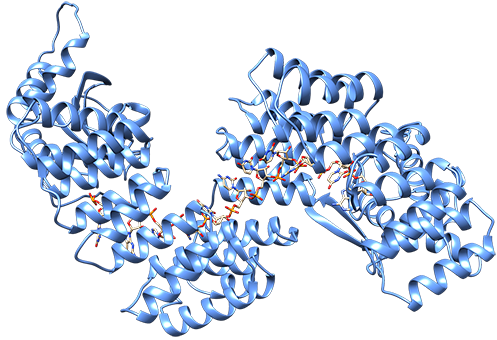
Our laboratory explores the interactions between RNA and molecules that identify and modify RNA sequences. Currently we are investigating application of C-to-U and U-to-C RNA editing enzymes to make desired changes to nucleic acid sequences. We are primarily interested in the use of RNA modifying thearpies to help alleviate genetic disease in humans though there is also potential for the improvement of crops. The enzymes we currently study belong to the DYW domain family associated with pentatricopeptide repeat (PPR) containing proteins. The PPR domains lend predictable and programable RNA base binding capacity and the C-terminal DYW domain either deaminates or aminates the targeted pyridine. The DYW domain family of proteins has expanded in land plants giving us a large enzyme family to explore, though can also be found in amoeba, protists, and rotifers. Designer PPR RNA editors have been shown to be active in E. coli, human cells, and mouse models through AAV delivery. We are investigating the development of novel PPR editors that can be applied to new therapies. Our work has been supported by the National Institutes of Health (NIH).
Please contact the PI through email about current openings.
Projects include...
- Developing new PPR editors to targeted diseases
- Using AI assisted programing for bioinformatic projects to improve PPR editors
- Wet bench biochemistry that investigates how to improve specificity and efficiency
- AI assisted modeling to elucidate editor functions and improvement
- Understanding native PPR editors using plant models
Techniques used include...
- AI assisted de novo protein modeling
- Next Generation Sequencing and analysis
- AI assisted bioinformatics
- Plasmid design and cloning
- Recombinant protein expression and purification
- Enzymatic reactions and assay development
- ESI and MALDI-TOF mass spectrometry
- RT-PCR techniques
- ICP-MS and ICP-OES
- Sanger and Next Generation sequencing
- Agrobacterial mediated transformation of Arabidopsis, tobacco, and tomato
- Tomato and tobacco tissue culture
Model organisms utilized include...
Bacterial expression models

Experience in the laboratory with the following plant models

- Arabidopsis thaliana
- Zea mays
- Ceratopteris richardii
- tomato
- tobacco
- Brachypodium distachyon